International Conference on Facts and Evidence: A Dialogue between Philosophy and Law was held at ECNU’s Zhongbei Campus on May 28 and 29, 2016. Many philosophers and jurists from the United States, Norway, Australia, Italy, Singapore, Sweden and China had many in-depth interdisciplinary communication and discussion at the conference held by China’s “2011 Plan” Collaborative Innovation Center of Judicial Civilization and ECNU’s Department of Philosophy and School of Law.
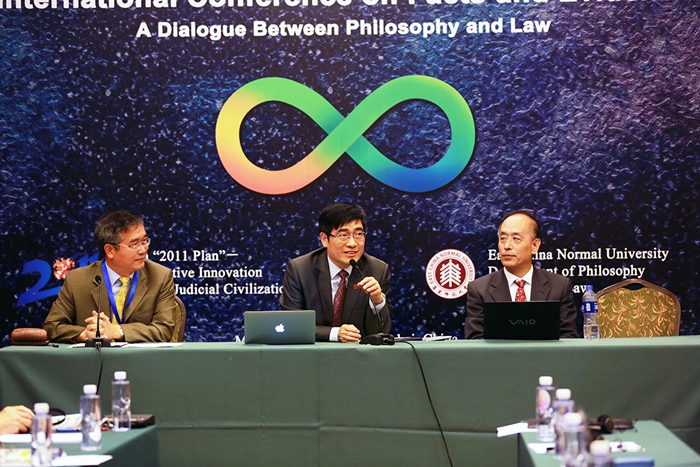
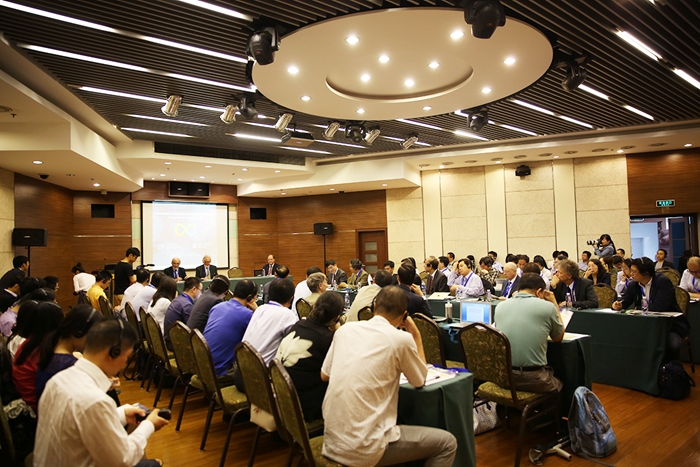
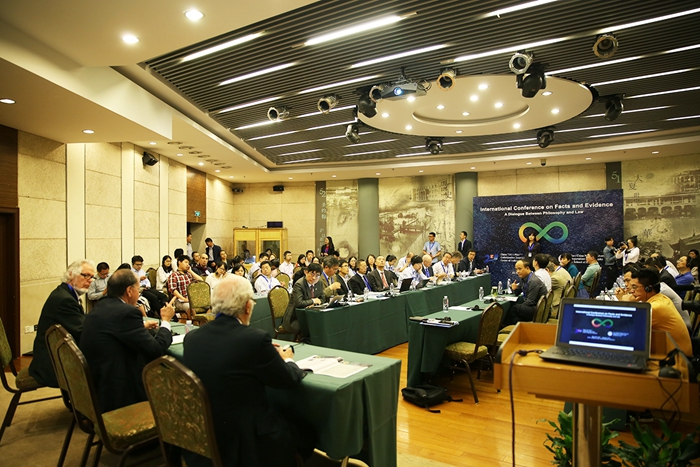
The conference is held at Zhongbei Campus.
“‘Facts’ and ‘evident’ are both philosophical and legal concepts. When Plato, in the voice of Socrates, made the classical distinction between ‘true belief’ and ‘knowledge’, these two concepts are actually brought into an epistemological discussion with a history of more than 2,000 years together with the roles of ‘lawyer’, ‘jury’ and ‘juror’,” said Prof. Tong Shijun, Chairman of ECNU’s University Council, in his speech delivered at the opening ceremony of the conference.
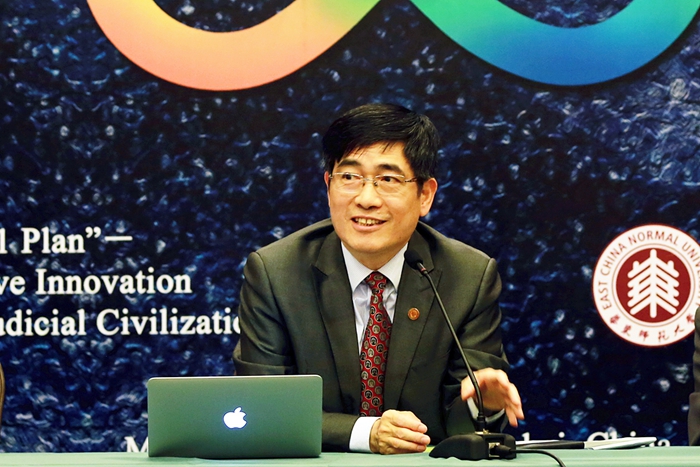
Tong Shijun

Zhang Baoshan
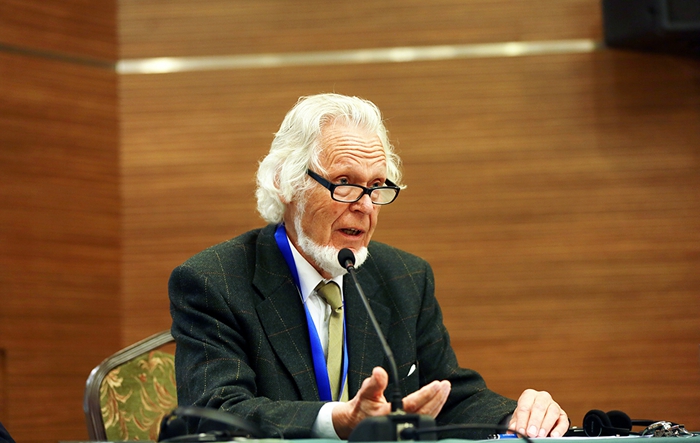
Gunnar Skirbekk
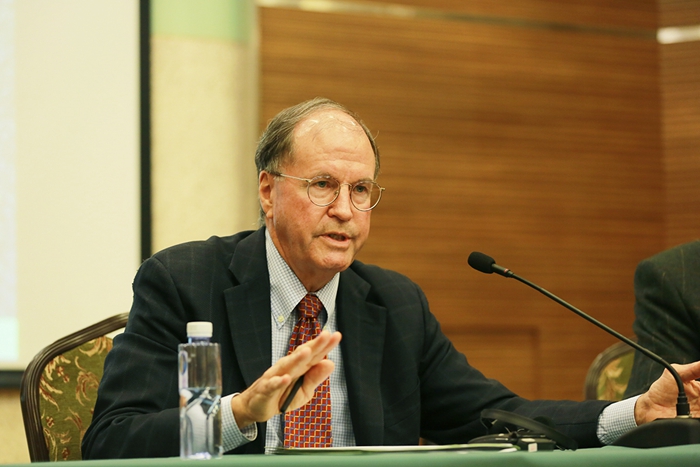
Ronald J. Allen
According to Prof. Zhang Baoshan, Dean Emeritus of China University of Political Science and Law, facts are the logical starting point of evidence law, as information relating to facts, is used to prove the possibility of an asserted fact. Trials begin with the determination of facts. Accurate determination of facts is the pre-condition of correct application of law and judicial justice. Evidence provides the necessary condition for fact-determination and the sole “bridge” connecting the objective facts and the cognitive subjects.
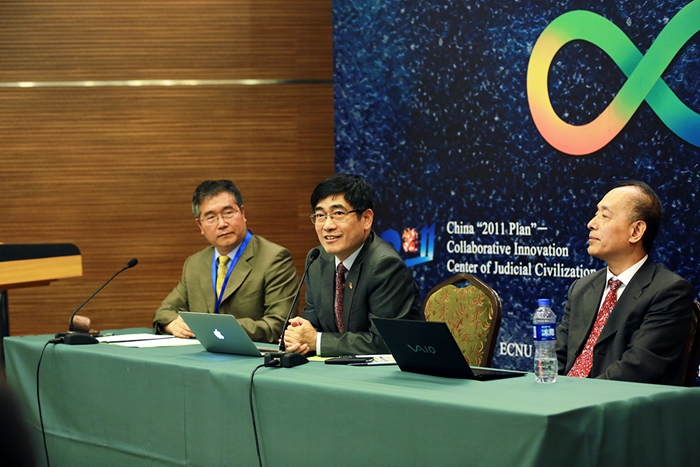
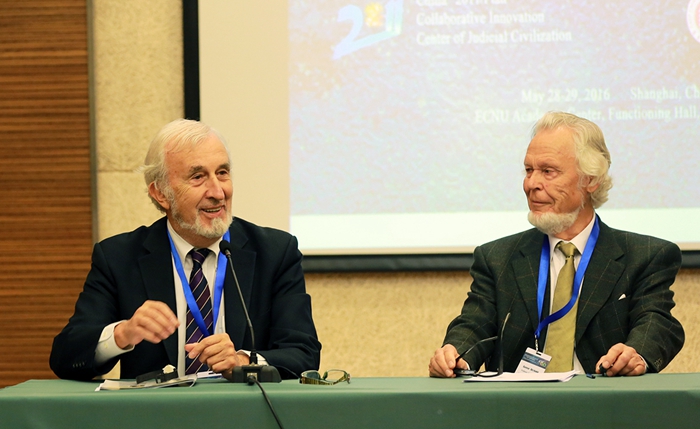
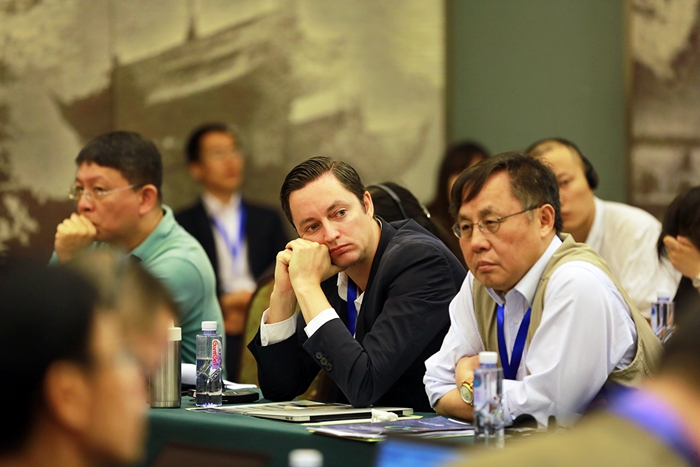
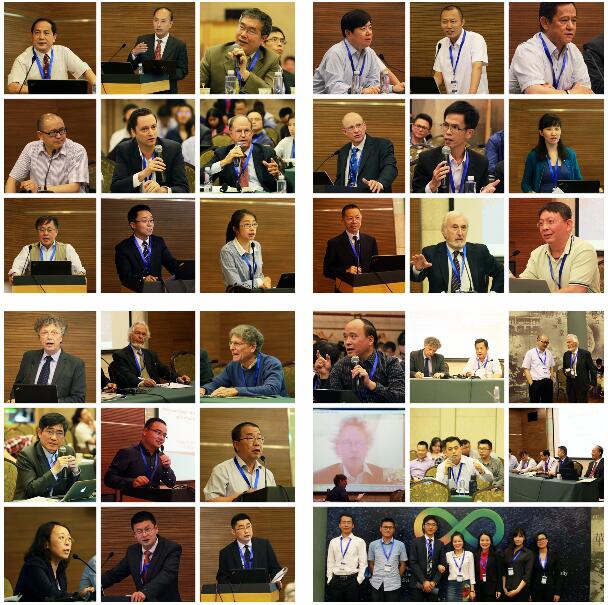
Experts on philosophy and law have in-depth communication during the conference.
Prof. Gunnar Skirbekk of University of Bergen, Norway, delivered a keynote speech at the conference. In his speech, he points out that there exists some paradigmatic relations between law and philosophy. After reflecting on the three-fold institutions of law-legislation, courts, and the academic discipline of jurisprudence, Prof. Skirbekk illustrated the interrelationship between law and philosophy, and discussed some central cases related to issues of certainty and uncertainty, and thus of evidence as well.
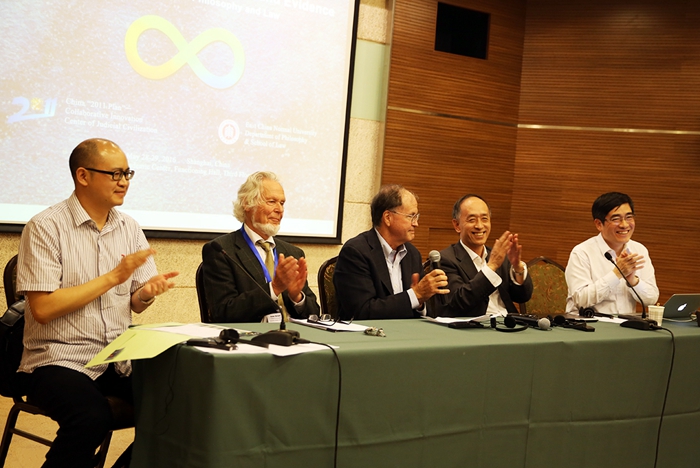
The closing ceremony makes a summary of the conference.
Prof. Ronald J. Allen of Northwestern University, the United States, made another keynote speech. According to him, any scholar in virtually any field should look for both knowledge and research tools — analytical, cognitive, or methodological — wherever they are that can be applied to solve problems that scholars focus upon. The legal system, and thus legal knowledge and legal science, stretches over the entire human domain, and as a consequence the subject matter of the disciplines that focus on different aspects of that domain is always pertinent to the legal scientist.
During the two-day conference, all the participants from home and abroad expressed their opinions and exchanged views on topics related to the theme of the conference.