Recently, a Sino-Brazilian joint research team consisting of scholars from East China Normal University, Shanghai Ocean University, and the University of São Paulo (Brazil) launched a nearly 10-day joint field expedition focusing on the Yangtze River Basin. The initiative aims to unravel the changing patterns of sediment transport processes in the world's major rivers and their impacts on the carbon cycle under the dual influences of global climate change and human activities.
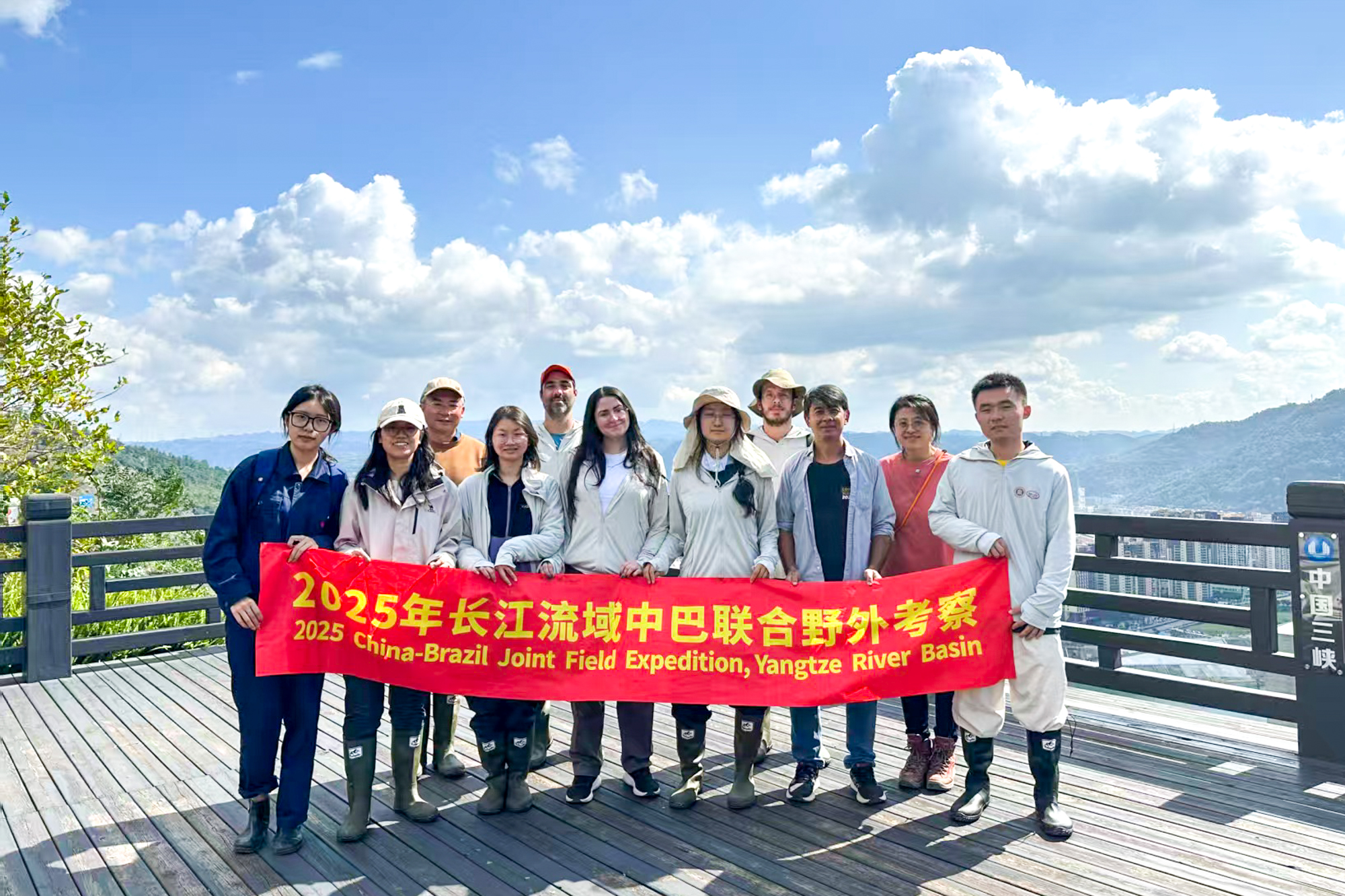
This research project centers on two major river systems in Asia and South America —the Yangtze River and the Amazon River, respectively. By integrating modern and historical processes, the team compares the sources, transport, and sedimentary characteristics of sediments in these two large rivers. The study seeks to reveal the crucial role of large river systems in the evolution of the surface environment across different time scales, clarify the coupling mechanism between natural processes and human activities, and provide scientific and technological support for the ecological health and sustainable development of coastal zones.
Prior to this Yangtze River expedition, the team had already completed joint surveys and sampling work in the Amazon River Basin in 2024. The current fieldwork in the Yangtze River Basin focuses on the investigation and analysis of modern sediment source-sink processes, covering key locations such as Nanjing, Chongqing, Yibin, and Panzhihua.

The joint expedition not only strengthens academic exchanges and cooperation between Chinese and Brazilian researchers in the fields of geomorphology, sedimentology, and global carbon cycle but also lays a solid foundation for further comparative studies on large river systems across continents.