On a quiet afternoon in Shanghai, a visitor stands before a vast, swirling canvas. It feels like an ocean, a galaxy, a storm, all at once. The painting is not the work of a single artist, but of many hands and bodies, moving together through grief and emerging with something luminous. This is art therapy, and it is changing the way we understand ourselves.
These works were created by ordinary people, not trained artists, during some 30 art therapy workshops led by Professor Yan Wenhua at East China Normal University. The participants came carrying stress, grief, fading memories, or simply a quiet hope to understand themselves a little better.
The Language Beyond Words
"Art therapy can bypass people's defense mechanisms," Professor Yan explains, "because it works through nonverbal means. You can paint your sadness. Sometimes there's no way to describe the sadness with words when the sadness is too immense to be spoken aloud."
This, perhaps, is the quiet revolution at the heart of art therapy. We spend so much of our lives translating feelings into language, trying to get the words right. But what if some things don't need translation at all? What if a brushstroke can say what a sentence cannot?
Following the Seasons
Some workshops moved to the rhythm of China's solar terms, grounding emotional exploration in the natural world. During Qingming, participants smelled plants, letting scent unlock memory and feeling. In summer, they listened to singing bowls and painted the shape of sound. And in the depths of winter, tea became the medium.
"That was during the Winter Solstice," Yan recalls, "to warm people up, through the way of tea drinking. We found a tea ceremony practitioner to collaborate with us, we guided the mindfulness practice, and she led the tea ceremony. Then we took out the used tea leaves and created all kinds of art with them."
Here, nothing is wasted. Even the leaves that have given their flavor to the tea find a second life as pigment and texture on paper. It is a gentle lesson in the possibility of transformation.
The Art of Listening
Other workshops focused on what Yan calls "relay paintings". The premise is simple, the effect profound: one person paints an emotion, and another person responds, not with words, but with images of their own.
"This is the painting by the first person who felt that time had been stolen," Yan says, pointing to a work on the gallery wall. In it, a clock appears, familiar yet haunting. "Another participant saw the emotions and gave the first person a response, so he created this painting. Inside it, there's still the clock, but now there's a figure, someone who wants to take control of time. So in the end, he asked, 'Where do you hope to spend your most important time?'"
What is remarkable about this exchange is its gentleness. "It offered a lot of support and strength, but not in a very controlling way, because it left the answer for the original painter to respond to." There is no fixing here, no unsolicited advice, only the quiet, powerful act of bearing witness.
From Grief, Something Grows
One of the exhibition's largest paintings was born from a two-year grief support group. At the end of their final session, participants were invited to gather around a single large canvas.
"By the end, they were painting with their hands, with their bodies," Yan remembers. "And they painted their feelings of sadness here." In the finished work, grief is not erased, it is present, dark and deep in places, but it does not stand alone. "There were many areas full of vitality. Along the edges you can see trees growing, life sprouting forth."
For Yan, this is the deepest teaching the workshops have to offer. "This symbolizes how sadness, when we accept it and come to understand it, can be transformed into a pure kind of strength."
It is a revelation that requires participants to first let go of something deeply ingrained. "Many people carry labels like 'I can't draw,' 'I don't dare to draw,' 'I'm not allowed to draw.' Once you remove these labels and constraints, their creativity is truly astonishing."
A Practice, Not a Cure
Art therapy, Yan is careful to note, is not presented as a miracle cure. It does not promise to erase pain or solve problems overnight. Rather, it is a way, a humble, practical, and deeply human way, to make feelings visible, to respond to others with empathy, and to find small tools for emotional balance in everyday life.
The results speak for themselves. "In these workshops, there are people who, after just one session, would tell us, 'This issue has been stuck for me for so long, and here I finally understood why I am the way I am today.'" Others return again and again. "Their emotional tolerance increases, and they also develop more courage to face the things that are happening in their lives."
The Future of Healing
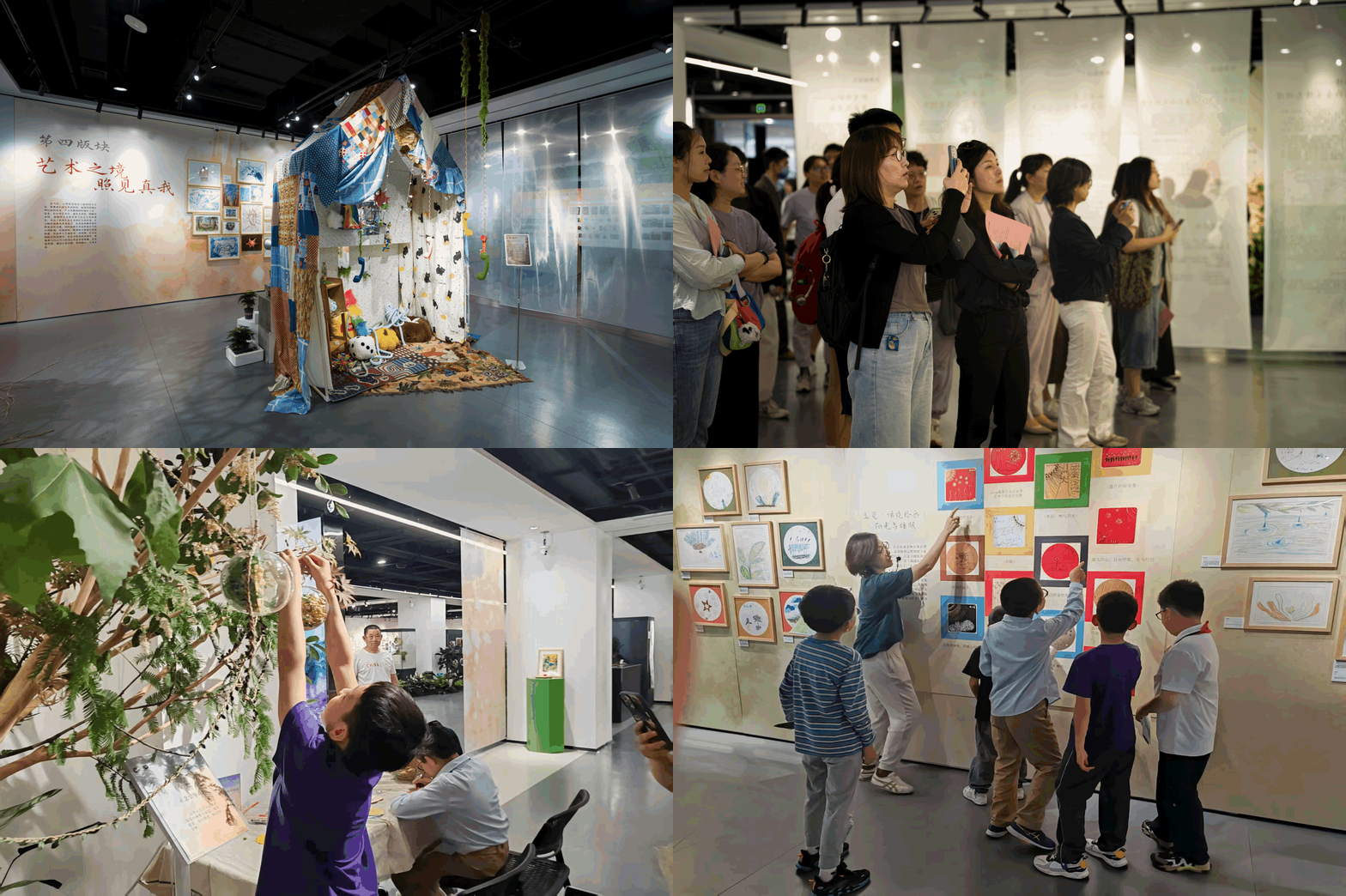
The exhibition also features installations by Fine Arts students at East China Normal University, a detail that is not incidental. This year, "art therapy" was officially added as one of China's new undergraduate degrees. The move reflects a growing recognition that mental health and healing practices need more professionals, more research, and more space in the public conversation.
ShanghaiEye Reporter: Zhang Hong