A week-long workshop in Shanghai brings together scholars from different disciplines to explore how technologies, goods, beliefs and people have moved across one of the world’s most connected maritime regions.
For centuries, the Indian Ocean has been more than a body of water separating continents. It has also been a corridor: a space where ships carried commodities, technologies, religious ideas and communities between Asia, Africa and beyond.
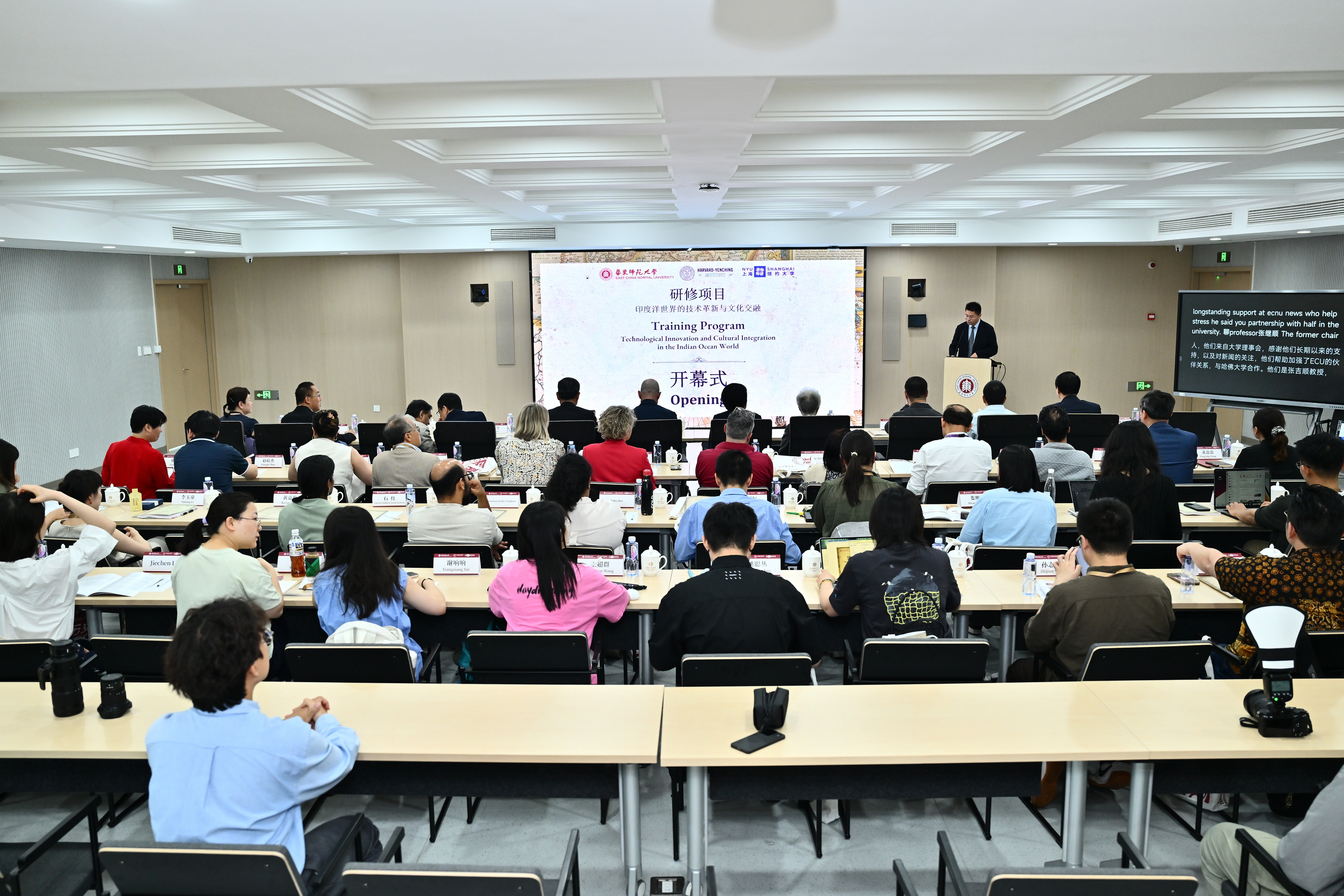
That history of movement is the focus of a new academic workshop that opened at East China Normal University in Shanghai on June 1. Organized by East China Normal University and the Harvard-Yenching Institute, with NYU Shanghai as a co-organizer, the week-long program is titled “Technological Innovation and Cultural Exchange in the Indian Ocean World.”
The workshop brings together scholars and early-career researchers from universities and research institutions in different countries, including Cornell University, Duke University, Ashoka University, the University of Sydney, De Montfort University, the National University of Singapore and East China Normal University.
Their subjects range widely across time and geography: the evolution of ancient maritime routes, the development of colonial ports, the circulation of plants and commodities, religious networks across the sea, Chinese migration, the preservation of maritime heritage and contemporary regional connectivity.
Taken together, these topics raise a larger question: what changes when history is viewed from the sea rather than from the land?
An Ocean of Connections
Historical narratives are often organized around countries, empires or political borders. The Indian Ocean offers a different vantage point. Its routes connected port cities and coastal communities long before the emergence of many modern nation-states.
The workshop reflects a growing interest in studying these connections without treating European colonial expansion as the only organizing framework. Instead, participants are examining the ocean as a space shaped by multiple actors, overlapping networks and long histories of exchange.
Technologies did not develop in isolation. Neither did trading systems, religious communities or cultural identities. Maritime history makes it possible to trace how ideas and practices changed as they moved between regions.
At the opening ceremony, Mei Bing, Secretary of the Party Committee of East China Normal University, described the Indian Ocean as a historic channel for cultural interaction, technological transmission and human mobility. She said the university is preparing to establish a research center focused on maritime civilizations and is seeking to expand its academic exchanges with overseas partners.
The Shanghai workshop is also the first advanced training program jointly organized by East China Normal University and the Harvard-Yenching Institute since 2014.
Moving Beyond a Single Narrative
James Robson, Director of the Harvard-Yenching Institute, emphasized the importance of examining the Indian Ocean through multiple perspectives. For centuries, he noted, the region has supported trade, migration, religious exchange and technological circulation.
Approaching the Indian Ocean as an interconnected world allows researchers to ask questions that do not fit neatly within national histories. How did port cities shape the movement of people and knowledge? How did technologies change as they crossed cultural boundaries? How did religious networks connect communities separated by long distances?
These questions are historical, but they also have contemporary resonance. Tong Shijun, Chancellor of NYU Shanghai, said the workshop comes at a time when geopolitical tensions are increasing and interactions between civilizations are becoming more complex. Looking closely at the history of maritime exchange, he argued, can offer useful perspectives on how different societies have cooperated, adapted and learned from one another.
Shanghai as a Meeting Point
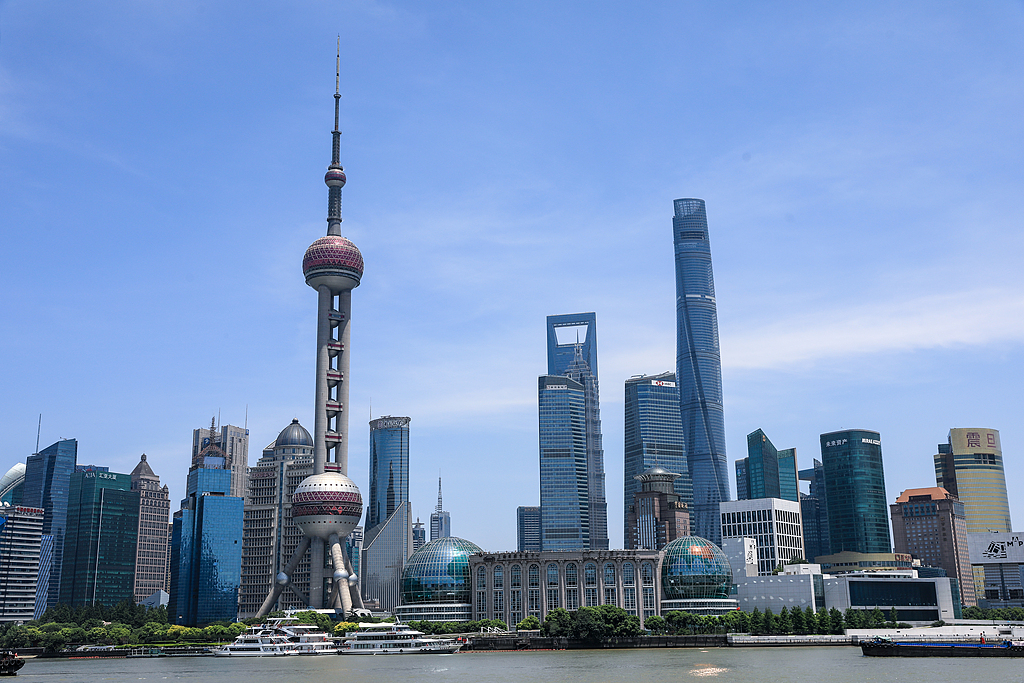
The choice of Shanghai as the venue is fitting. The city has long been shaped by maritime trade, migration and encounters between different cultures. It is also home to universities and research institutions with growing interests in global history and area studies.
At East China Normal University, researchers from departments including history, geography, international relations and foreign languages have been working on subjects related to maritime history, the Maritime Silk Road and exchanges between Asia and Africa.
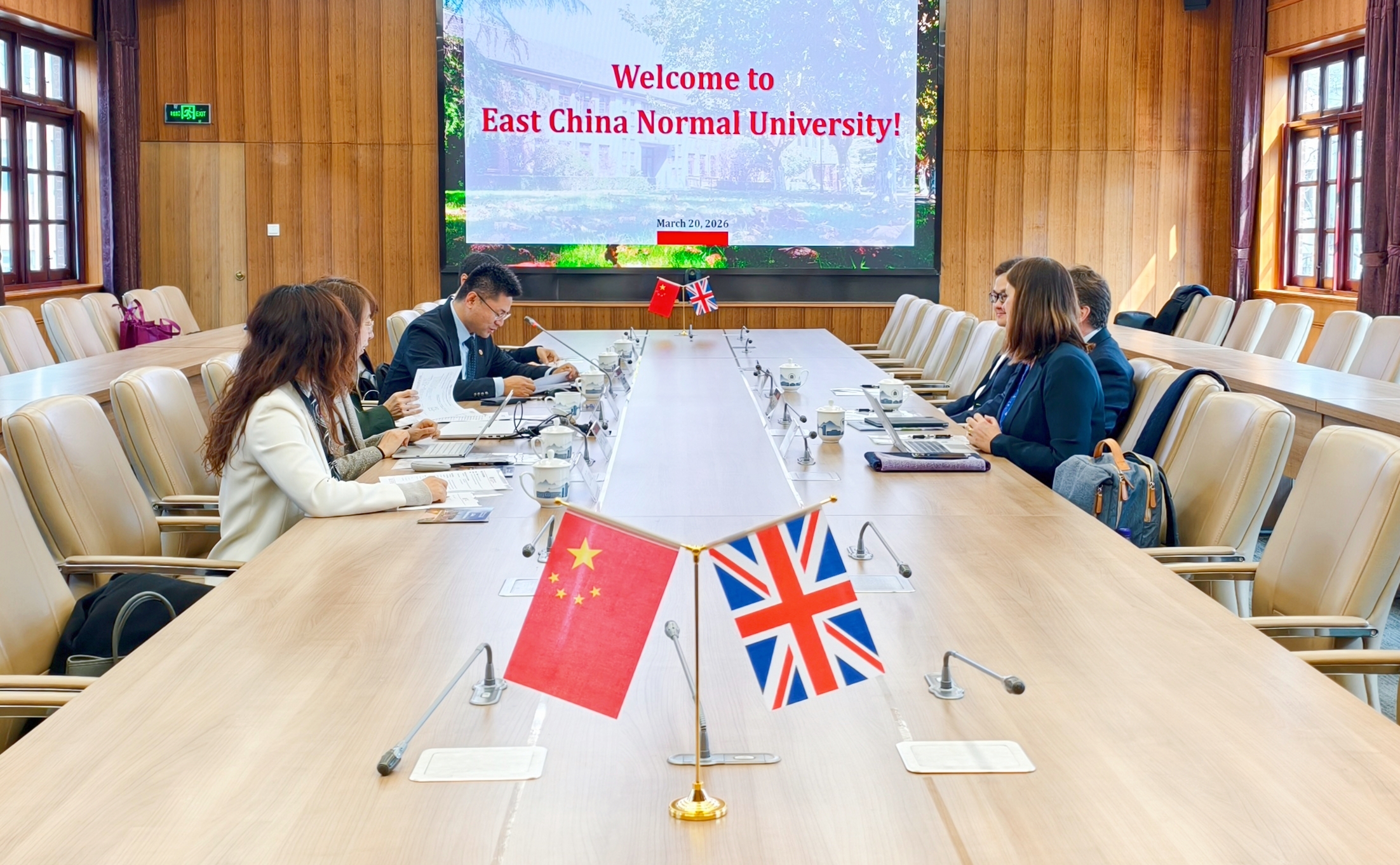
Before the workshop opened, Mei Bing and James Robson also held a meeting to discuss further cooperation between their institutions. According to the organizers, their plans include academic visits, the sharing of archival resources and joint research projects in fields such as East Asian religious studies and area studies.
The two institutions are also considering collaborative academic events in 2028, when the Harvard-Yenching Institute marks its centenary and the partnership between the institute and East China Normal University reaches its 25th anniversary.
Seeing History From the Sea
Over the course of the week, participants will attend lectures, discussions and field visits. The program is designed not only to present research, but also to create space for scholars from different disciplines and academic backgrounds to exchange methods and ideas.
The Indian Ocean is a vast subject. It can be studied through ships and ports, maps and archives, religious communities and migrant networks, commodities and technologies. But its significance lies partly in the way these separate stories intersect. To study the Indian Ocean is to see history as a process of movement: across coastlines, between languages and through communities that were never as isolated as maps might suggest.
From that perspective, the sea is not simply the setting for the story. It becomes a way of reading the past.
ShanghaiEye Reporter: Zhang Hong